
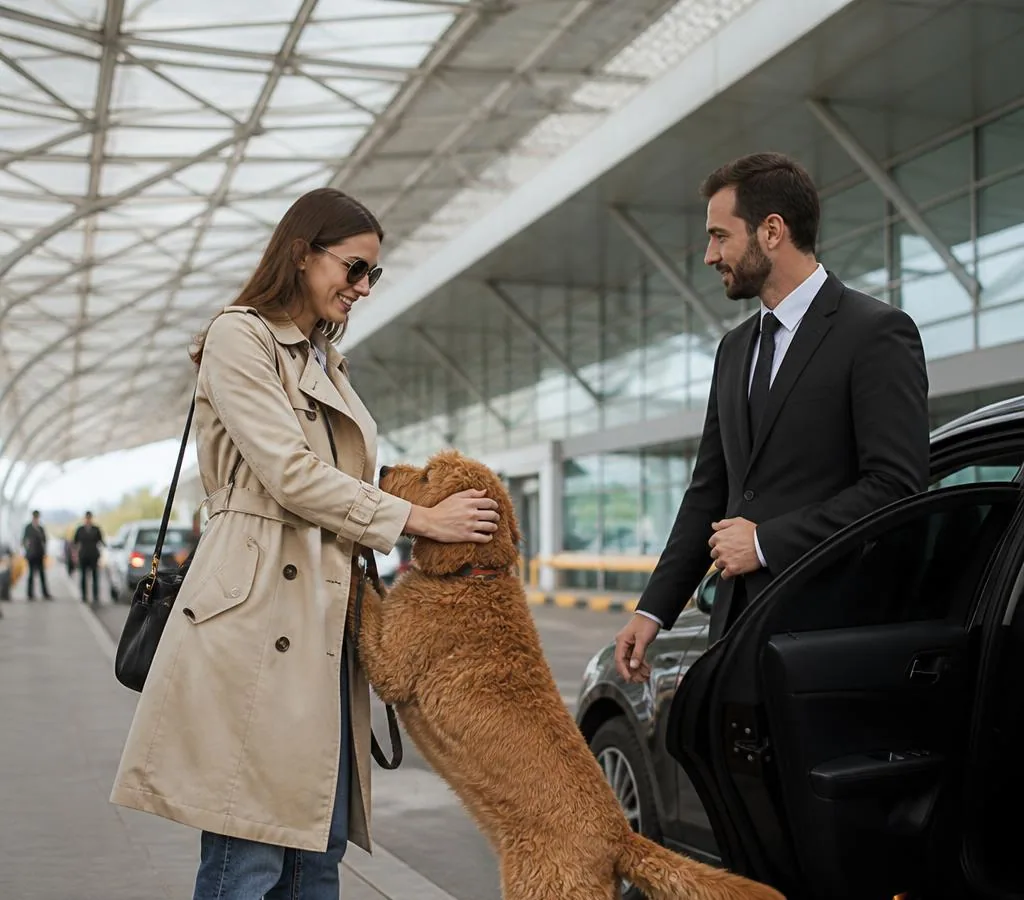
Flying from the United States to Paris Charles de Gaulle and continuing by road can be a practical way to reach Great Britain with a dog or cat. The pet first enters the European Union in France. After the French arrival checks, you can meet EuroPaw Travel for a private drive to Calais, cross through LeShuttle and continue to your UK address.
The important point is that this is a two-border itinerary. French and EU rules apply when the pet lands at CDG. Great Britain rules apply again before the Channel crossing. Both parts must be prepared before departure from the United States.
Published and reviewed 19 October 2026. Always recheck USDA APHIS, French Customs, GOV.UK and the airline before travel.
Is Paris CDG a useful arrival point?
CDG is geographically well placed for an onward road journey towards Calais. It also has a wide choice of transatlantic flights, although airline pet acceptance varies by carrier, route, aircraft, season and animal.
Choose CDG only after the airline has confirmed how your pet will travel and the French arrival process for that arrangement. An airline selling a passenger ticket does not automatically mean that the pet booking is confirmed.
This guide is specifically for travellers arriving from the USA. For the road service without the US flight context, use the CDG to London pet taxi page or the wider Charles de Gaulle to UK pet transport page.
Before booking the flight
Ask the airline to confirm:
- whether it accepts your species, breed and carrier on the exact flight;
- whether the pet can travel in the cabin, hold or under another arrangement;
- the required carrier dimensions and construction;
- the check-in location and check-in time;
- where the pet will be collected at CDG;
- what documentation the airline checks before departure;
- its current weather, breed and connection restrictions.
Keep the written confirmation. Airline policies change more often than government entry rules, and call-centre advice can be misunderstood if the animal booking is not attached to the reservation.
Prepare the French and EU entry documents
For a typical non-commercial movement of five or fewer dogs, cats or ferrets from the United States, the preparation normally includes:
- a compatible microchip;
- a valid rabies vaccination given after the chip was fitted or read;
- the required waiting period after a primary rabies vaccination;
- the correct EU non-commercial animal health certificate;
- USDA endorsement within the official timing window;
- the signed non-commercial declaration;
- original documents travelling with the animal.
The United States is on the EU list that can enter without a rabies antibody titration test for this type of movement, provided the journey does not include a disqualifying transit. Your USDA-accredited veterinarian remains responsible for using the current certificate and assessing the actual itinerary.
Read the current USDA APHIS France destination page and the French Customs pet entry guidance.
Plan the separate Great Britain entry
Landing in France does not convert an American pet into an EU-resident pet and does not create an EU pet passport. The certificate used to enter France supports the EU arrival and onward EU travel under its conditions, but GOV.UK publishes a separate list of documents accepted for entry into Great Britain.
The practical conclusion is simple: ask the USDA-accredited veterinarian to assess both borders and the exact route. Depending on the circumstances, the pet may need an EU animal health certificate for France and a Great Britain pet health certificate for the UK entry. Do not rely on a travel forum or a previous trip.
Our USA to UK pet travel documents guide explains the two document systems side by side.
Dog tapeworm timing for the UK border
Most dogs entering Great Britain from France need a vet to administer an approved tapeworm treatment no less than 24 hours and no more than 120 hours before the expected time of UK entry. The product, date, time and veterinarian details must be recorded correctly in the accepted travel document.
For a USA to Paris to UK journey, the appointment can be difficult to time if the flight changes. Work backwards from the planned arrival in Great Britain, allow a sensible margin and ask the veterinarian which document section must be completed.
Cats and ferrets do not have this dog tapeworm requirement. Route exemptions exist, but a journey from France to Great Britain is not one of the usual exempt direct routes. Read the EuroPaw tapeworm timing guide and current GOV.UK guidance.
What happens after landing at CDG
The exact sequence depends on how the airline transported the pet. Allow for immigration, baggage collection, pet collection and the required Customs or veterinary document and identity checks.
Do not set the private-driver meeting time as if you were travelling with hand luggage only. A pet arriving under a cargo or specialist handling process can be released differently from a pet accepted in the cabin.
When asking EuroPaw for a quote, provide:
- airline and flight number;
- arrival date and scheduled time;
- terminal if known;
- how the pet is booked to travel;
- species, size and carrier dimensions;
- passenger and luggage count;
- UK destination address.
We agree a meeting method using the information available. If the airline changes the arrival terminal or release process, tell us promptly.
The private road journey from CDG to the UK
After collection, the vehicle heads north towards Calais. The route and stops depend on traffic, the crossing booking, passenger needs and animal welfare. Before boarding LeShuttle, the pet's identity and documents are checked for Great Britain entry.
Calais Coquelles to Folkestone Cheriton is listed by GOV.UK as an approved rail route for pet travel. You stay with your pet in the private vehicle during the crossing. After Folkestone, the journey continues to the confirmed UK address.
EuroPaw does not promise one fixed duration for every USA arrival. Flight release time, traffic, border checks, crossing availability, rest stops and the final UK postcode all affect the day.
What to keep accessible
Use one hand-carried folder for:
- the original endorsed EU certificate and declaration;
- the original Great Britain document prepared for the route;
- rabies vaccination evidence;
- microchip records;
- dog tapeworm treatment record where required;
- owner authorisation if another person travels with the pet;
- flight and pet booking confirmation;
- EuroPaw contact and collection details.
Do not pack the originals in checked luggage or underneath the main load in the vehicle.
Common planning mistakes
Preparing only for the flight to France
The French arrival is the first border, not the final legal step. Prepare the UK entry at the same time.
Treating an EU health certificate as an EU pet passport
They are different documents. US residents do not receive an EU pet passport simply by landing in France.
Booking the driver too close to touchdown
Pet collection and entry checks can take longer than ordinary baggage collection. Build the handover around the actual airline process.
Timing dog tapeworm treatment against departure from the USA
The UK window is measured against entry into Great Britain. A delay can change whether the recorded treatment remains valid.
Hiding the real luggage or carrier size
A long road journey needs the correct passenger and storage space. Give accurate dimensions before the vehicle is confirmed.
Frequently asked questions
Can EuroPaw collect directly from Paris CDG?
Yes, subject to availability and a confirmed meeting plan. Collection takes place after the passenger and pet have completed the required French arrival and release process.
Does EuroPaw arrange the flight from the USA?
No. The traveller books the flight and pet carriage with the airline or a chosen flight specialist. EuroPaw provides the private road section from Europe to the UK.
Can my pet get an EU passport at CDG?
Do not plan on receiving an EU pet passport on arrival. US-origin travellers should prepare the correct EU health certificate before departure and ask official sources about documents for later journeys.
Is the Paris route approved for UK pet entry?
The relevant approved Channel route is Calais Coquelles to Folkestone Cheriton with Eurotunnel Le Shuttle. The airport-to-Calais drive is the road section leading to that approved crossing.
Can a cat use this route?
Yes, if the airline accepts the cat and the animal meets the EU and Great Britain entry requirements. Cats need a secure carrier for the road journey and do not need the dog-specific tapeworm treatment.
What if my flight is delayed?
Contact EuroPaw as soon as the airline confirms a material delay. Collection, driver hours and crossing plans may need to change, and the timing of a dog's tapeworm treatment may also need to be checked.
Arrange the road transfer before finalising the itinerary
Start with the USA to UK via Europe service page, then contact EuroPaw Travel with the complete flight, pet, passenger, luggage and UK destination details. We will review the private road section and confirm what can be planned around your arrival.