
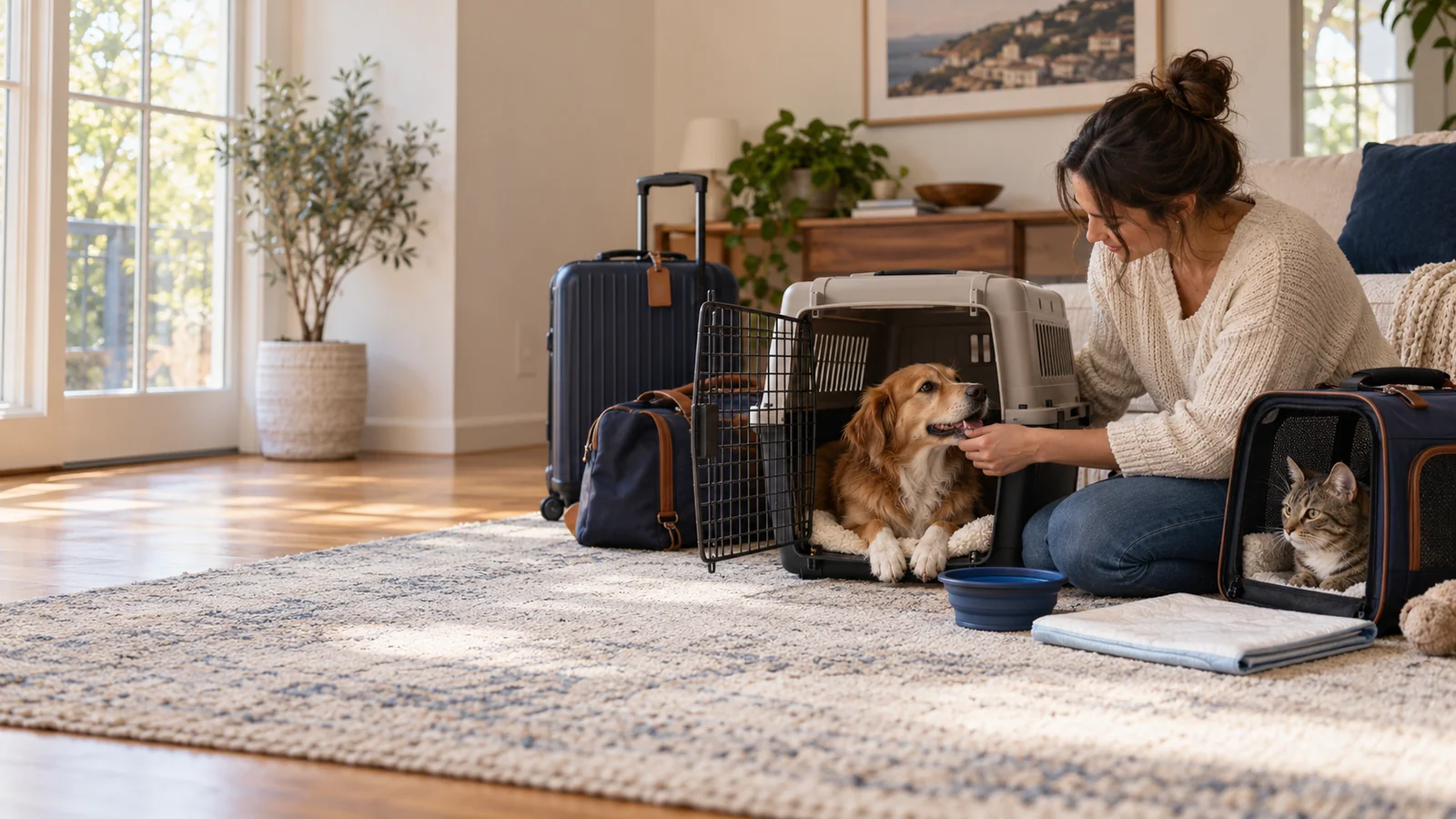
Flying from the United States to Europe with a dog or cat takes more than adding the pet to a passenger reservation. The airline has to accept the animal on the exact flight, the carrier must meet that airline's rules and the veterinary documents must be valid at the first European entry point.
If the final destination is Great Britain, the European flight is only the first stage. You also need an accepted UK entry route and documents for the later border.
Published and reviewed 19 October 2026. Airline policies and entry rules change. Confirm every operational detail directly with the carrier and every health requirement with official authorities and a USDA-accredited veterinarian.
Start with the route, not the cheapest ticket
Choose a flight only after checking these four parts together:
- the airline accepts your pet on the exact service;
- the European airport can process the animal's arrival arrangement;
- the veterinary documents fit the first entry date;
- the onward transport and final-country documents also work.
A flight with a connection can create additional country, airline or handling requirements. A direct flight to the chosen European arrival airport is often easier to understand, but suitability still depends on the pet and carrier.
For onward private road travel to Great Britain, EuroPaw currently covers arrivals through Paris CDG, Amsterdam Schiphol and Brussels Airport.
Get explicit airline confirmation
Airlines set their own animal policies on top of government entry rules. Ask about the exact flight number and date, not a general route.
Confirm:
- whether the species and breed are accepted;
- minimum age and any medical or fitness requirements;
- cabin, hold or other carriage options;
- animal-plus-carrier weight and size limits;
- carrier construction, ventilation and fastener rules;
- advance reservation and check-in deadlines;
- seasonal or temperature restrictions;
- where the animal is checked in and collected;
- documents the airline wants to see;
- what happens if the aircraft or schedule changes.
Ask for the animal reservation reference in writing. A passenger confirmation alone is not proof that the pet has a place.
Understand cabin, hold and cargo language
The words used by travellers are not always the terms used by airlines. A small pet may be accepted in the cabin by one carrier but not another. A larger animal may travel in a temperature-controlled hold under the passenger booking, or the airline may require a cargo process.
The collection point at the European airport can differ accordingly. This affects immigration, baggage, pet release and the time a private driver can realistically meet you.
Do not advertise or assume a particular arrangement for your pet until the airline confirms it. EuroPaw does not control the flight or airport animal-release process.
Choose and prepare the carrier
Use the dimensions and construction required by the airline for the confirmed travel arrangement. The animal should be able to use the carrier safely and the door, ventilation and fasteners should function correctly.
Introduce the carrier well before travel. Let the pet enter voluntarily, rest inside with the door open and build up calm periods gradually. Use only bedding and accessories permitted by the airline.
Label and accessory rules differ. Follow the carrier's written instructions rather than copying a photograph from social media.
Arrange the veterinary timeline
For a typical non-commercial dog, cat or ferret journey from the USA to the EU, preparation usually includes:
- compatible microchip identification;
- valid rabies vaccination after identification;
- at least 21 full days after a primary vaccination;
- the current EU animal health certificate;
- USDA endorsement within the required arrival window;
- the signed non-commercial declaration;
- original documents travelling with the animal.
The US is listed for EU pet travel, so a rabies antibody titration test is not normally required for a qualifying direct movement. A transit route or unusual circumstances can change what is needed.
Read the European Commission guidance, use the USDA APHIS pet travel destination tool and work with a USDA-accredited veterinarian.
If Great Britain is the final destination
The EU entry certificate solves the first border only. Great Britain has its own accepted documents, approved routes and dog tapeworm rule.
Before flying, ask the veterinarian to review the complete USA to EU to UK itinerary. Read the USA to UK pet travel documents guide and the current GOV.UK entry guide.
Most dogs entering Great Britain from continental Europe need vet-administered tapeworm treatment 24 to 120 hours before UK entry. The flight schedule, European arrival process, road journey and Channel crossing all affect that window.
Prepare the pet for a long travel day
Discuss fitness to fly and any health concern with the veterinarian. Tell the airline if the pet has a medical need that could affect acceptance or handling.
Keep feeding, hydration and exercise decisions within professional and carrier guidance. Do not give sedatives, calming medication or supplements solely on internet advice. Ask the veterinarian and airline because medication can affect animal safety and carrier acceptance.
Practise calm handling of the carrier and lead. A microchip scan, security check or transfer between handlers is easier when the pet is familiar with being approached and contained.
Pack one accessible pet travel kit
Subject to airline rules, keep together:
- original endorsed health documents;
- rabies and microchip records;
- owner declaration and authorisation;
- airline pet confirmation;
- contact details for the veterinarian and airline pet desk;
- lead, harness and secure carrier equipment;
- a small amount of permitted food;
- collapsible bowl and cleaning supplies;
- familiar bedding if accepted;
- a recent clear photograph of the pet;
- onward pickup contact and destination details.
Keep critical documents in hand luggage. Digital copies are backups, not substitutes for required originals.
On the day of departure
Scan or verify the microchip if the veterinarian has advised it. Compare the number on the pet's records. Check that all certificate pages, declarations, signatures and endorsements are present.
Arrive at the check-in location at the time specified for animal travel. It may be earlier or in a different place from normal passenger check-in. Follow the airline's feeding, water and carrier instructions.
If the flight is delayed or cancelled, ask both the airline and veterinarian how the change affects the animal booking and time-limited documents.
At the first European airport
Follow the airline's instructions for collecting the pet and the arrival-country directions for document and identity checks. Do not leave the controlled arrival process before those checks are complete.
Only then proceed to the private-transfer meeting point. Keep the animal secure and the original documents accessible. If the release location differs from the plan, contact the driver before moving elsewhere.
Handover to EuroPaw for the UK road journey
For a private transfer, EuroPaw needs the arrival flight, terminal or collection point, scheduled time, passenger count, pet details, carrier dimensions, luggage and UK destination.
The USA to UK via Europe service page explains the road section. You travel with your pet in the vehicle, cross through LeShuttle on the approved Calais to Folkestone route and continue to the confirmed address.
Common flight-planning mistakes
Buying the ticket before the pet is accepted
Pet capacity and restrictions can differ from passenger availability. Confirm both bookings.
Choosing a carrier from a generic online list
Use the dimensions and design required by the airline for your exact arrangement.
Starting carrier training in the final week
Gradual familiarisation is calmer than forcing an unfamiliar crate on travel day.
Packing original documents in checked luggage
Authorities and airline staff may need them before that luggage is accessible.
Ignoring the onward border
If the UK is the final destination, EU entry is not the end of the legal preparation.
Frequently asked questions
Can my dog or cat fly in the cabin from the USA to Europe?
It depends on the airline, flight, pet, carrier and current policy. Ask the carrier to confirm the exact service in writing before booking.
Is an airline health form the same as the EU certificate?
Not necessarily. Airline fitness or acceptance documents do not replace the official EU animal health certificate unless the relevant authority explicitly says so.
Do I need a USDA-accredited veterinarian?
For the normal US export certificate process, use a USDA-accredited veterinarian and follow USDA APHIS endorsement instructions for the destination.
Should I sedate my pet for the flight?
Do not medicate a pet solely on general online advice. Discuss the animal with the veterinarian and check the airline's policy before giving any sedative, calming medicine or supplement.
When should I book the onward driver?
Discuss availability early, but provide the confirmed flight and pet-release arrangement. The pickup plan should include time for immigration, baggage, animal collection and official entry checks.
What if the flight changes after certificates are issued?
Contact the airline, veterinarian and onward transport provider. A new arrival date can affect endorsement, certificate or dog-treatment windows.
Plan the flight and road transfer as one journey
Once the airline has confirmed the pet, contact EuroPaw Travel with the full arrival and UK destination details. We will assess the private European road section while you and the veterinarian complete the official flight and border preparation.